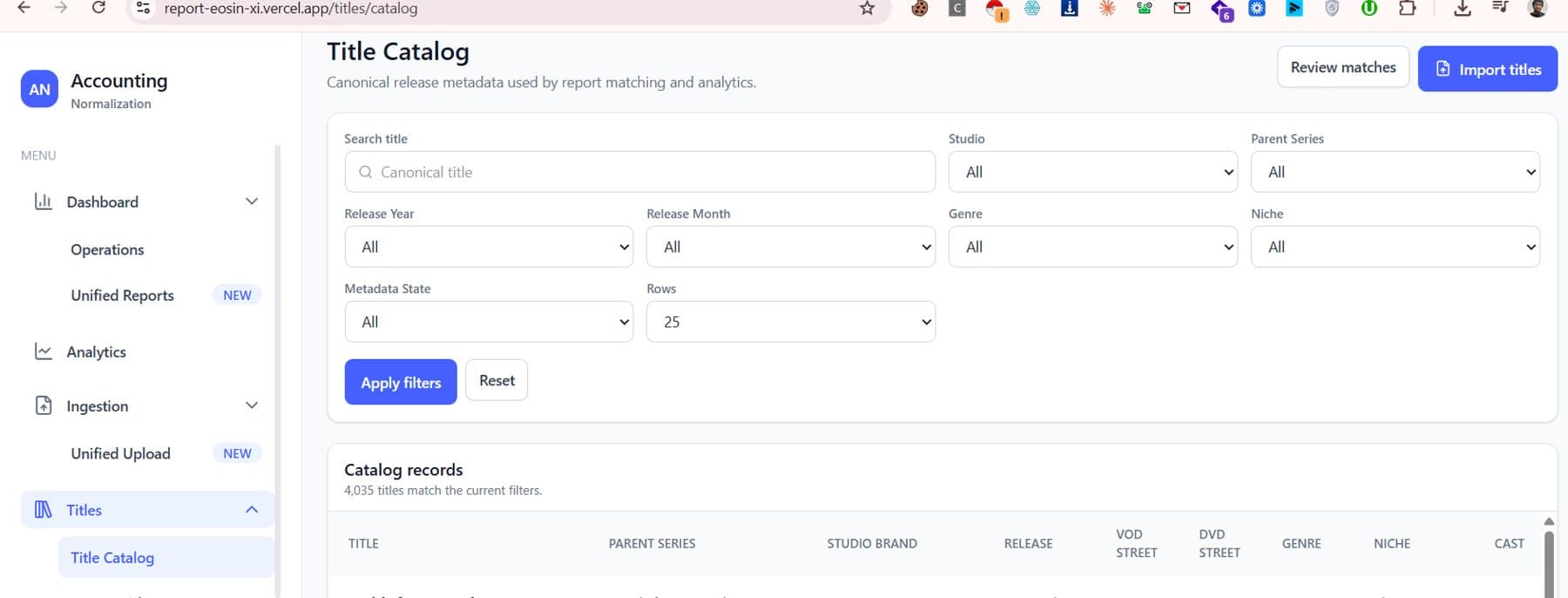
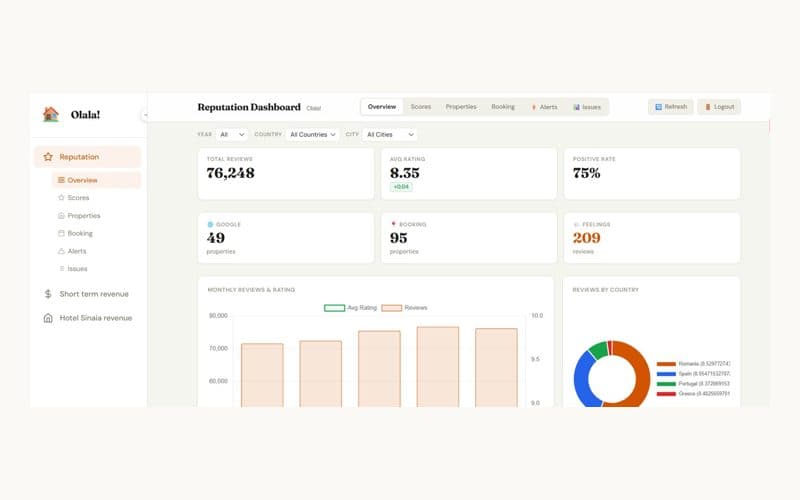
A finance operations dashboard that turns messy invoice inputs into one clean, Airtable-ready format. It combines parsing, Supabase storage, Airtable sync, and Recharts KPIs so teams can review invoice flow and reporting from one place.
Project type
Custom software
Best for
Finance teams replacing manual invoice cleanup
Outcome
Invoice Ops Dashboard
Core stack
Next.js, Supabase, Airtable API
Technology stack
Next.js
Supabase
Airtable API
Recharts
TypeScript
01 — The challenge
Client challenge
The client was receiving invoice data in inconsistent formats and had no reliable way to normalize records, sync the approved version into Airtable, or understand invoice activity and KPI trends from one dashboard.
02 — What I built
What I built
I built a Next.js dashboard backed by Supabase that parses incoming invoices, converts them into a unified schema, saves the normalized output to Airtable, and presents operational metrics through Recharts visualizations.
Invoice parsing flow that standardizes inconsistent source formats
Unified invoice schema stored and synced across Supabase and Airtable
Airtable integration for client-facing record management
KPI dashboard with Recharts charts and summary metrics
Next.js interface for reviewing parsed invoice data before handoff
Inside the build
01 / 04
03 — The outcome
Measured outcomes
The client gained a single workflow for turning messy invoice inputs into clean, Airtable-ready records. Manual formatting work was removed, and KPI visibility moved from scattered checks to one reporting dashboard.